More
Сhoose
Category: Agri Tech
Date:
Author: Dianah
Unpredictable rainfall, droughts, extreme temperatures, soil degradation, rising input costs, and changing pest pressures are creating new challenges for farmers around the world.
As a result, climate-smart agriculture and regenerative farming are becoming increasingly important strategies for building productive and resilient agricultural businesses.
But climate-smart agriculture is not simply about protecting the environment. For farmers and agribusinesses, it is also about protecting productivity, managing risk, improving resource efficiency, and building a farm that can remain profitable under changing conditions.
What Is Climate-Smart Agriculture?
Climate-smart agriculture is an approach to farming that aims to balance three important goals:
Maintaining or improving agricultural productivity
Building resilience to climate change
Reducing agriculture's environmental impact where practical
Modern research continues to examine how climate-smart practices can improve productivity, resilience, and sustainability under changing climatic conditions.
The exact practices will depend on the farm, crop, climate, soil, market, and available resources.
Why Climate Resilience Matters
Farmers increasingly have to make decisions in uncertain conditions.
A planting strategy that worked reliably several years ago may not produce the same results when rainfall patterns change.
Similarly, higher temperatures can increase water requirements, influence pest populations, and affect crop development.
This means agricultural planning increasingly needs to consider both today's farm requirements and tomorrow's climate risks.
5 Climate-Smart Practices Worth Considering
1. Improve Soil Health
Healthy soils can play an important role in agricultural resilience.
Practices such as cover cropping, crop rotation, reduced soil disturbance, organic matter management, and appropriate use of compost or other soil amendments can contribute to better soil structure and water management.
Improving soil health is a long-term investment rather than a quick fix.
2. Improve Water Management
Efficient water management is becoming increasingly important.
Depending on the farming system, solutions may include:
Drip irrigation
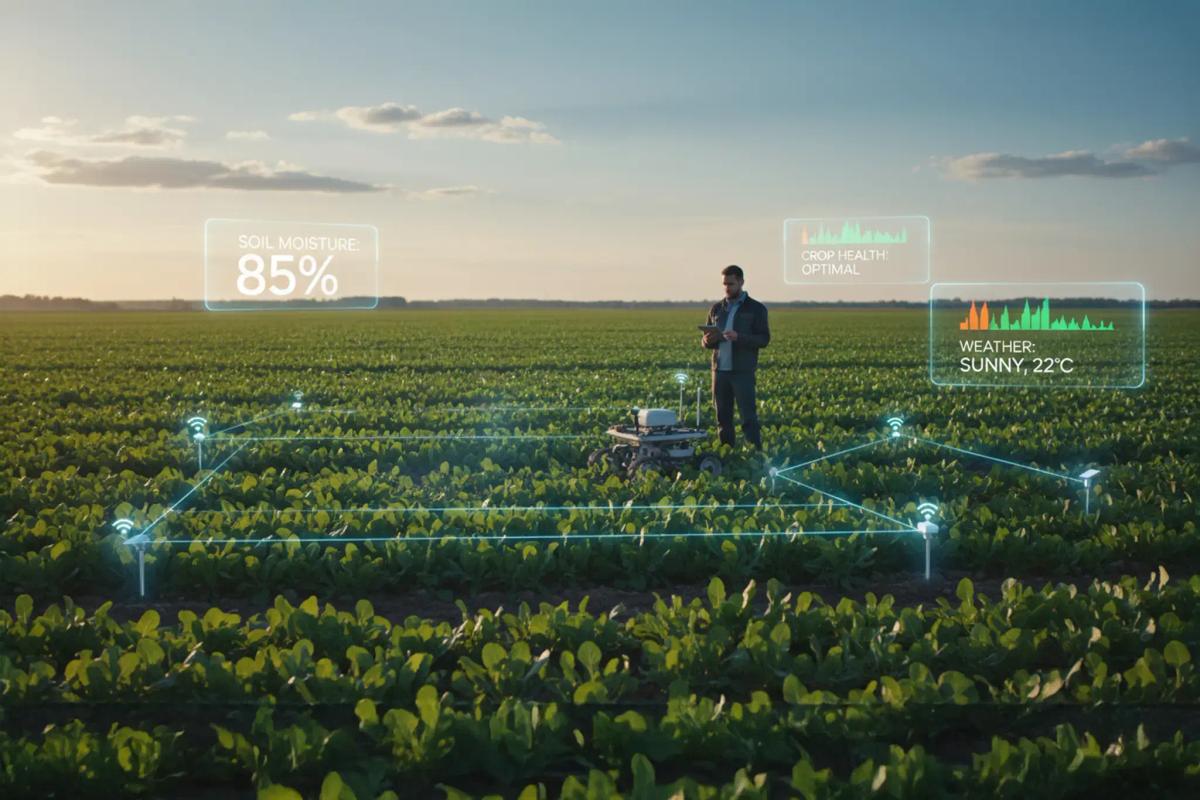
Soil moisture monitoring
Rainwater harvesting
Mulching
Improved irrigation scheduling
Drought-tolerant crop varieties
Water-efficient production systems
The right strategy should be based on local conditions rather than applying the same solution to every farm.
3. Diversify Production
Agricultural diversification can help reduce dependence on a single crop or revenue stream.
Farmers may consider combinations of crops, livestock, agroforestry, horticulture, or other agricultural enterprises where appropriate.
Diversification does not eliminate risk, but it can help spread exposure across different production and market conditions.
4. Explore Regenerative Agriculture
Regenerative agriculture places significant emphasis on rebuilding soil health and improving ecosystem function.
Practices may include cover crops, crop rotations, reduced tillage, integrated livestock systems, agroforestry, and improved pasture management.
Interest in regenerative agriculture has increased as farmers and businesses look for ways to improve resilience to drought and other climate stresses. Recent reporting has highlighted examples of farms using regenerative practices to improve soil structure and water retention under difficult weather conditions.
However, regenerative practices should be selected based on the specific farm rather than treated as a universal formula.
The Role of Agricultural Consultants
Transitioning toward climate-smart agriculture requires careful planning.
Farmers need to consider questions such as:
Which climate risks affect my farm most?
Which crops are best suited to future conditions?
How can I reduce unnecessary water use?
Is my soil healthy enough to support long-term production?
Which agricultural technologies are worth investing in?
How can I improve farm profitability while reducing unnecessary inputs?
What risks should I prepare for over the next five to ten years?
An experienced agricultural consultant can help answer these questions by combining agronomic knowledge, farm data, market information, and financial considerations.
Climate-Smart Agriculture Is Not One-Size-Fits-All
One of the biggest mistakes businesses can make is adopting an agricultural trend without first understanding their own operation.
A practice that works extremely well on one farm may be unsuitable for another because of differences in:
Soil type
Rainfall
Crop varieties
Farm size
Water availability
Labour
Access to markets
Capital
Farm infrastructure